
Buying, building, or renovating a home is already a big enough project without having to decode GST/HST rebate rules as a side quest. The good news is that major renovations, custom builds, and qualifying new home purchases can create significant rebate opportunities—but only if the project meets detailed construction, occupancy, value, and timing conditions. Here is the practical framework for owner-built and substantially renovated homes in Ontario.
When a Renovation Counts as a “New” Home
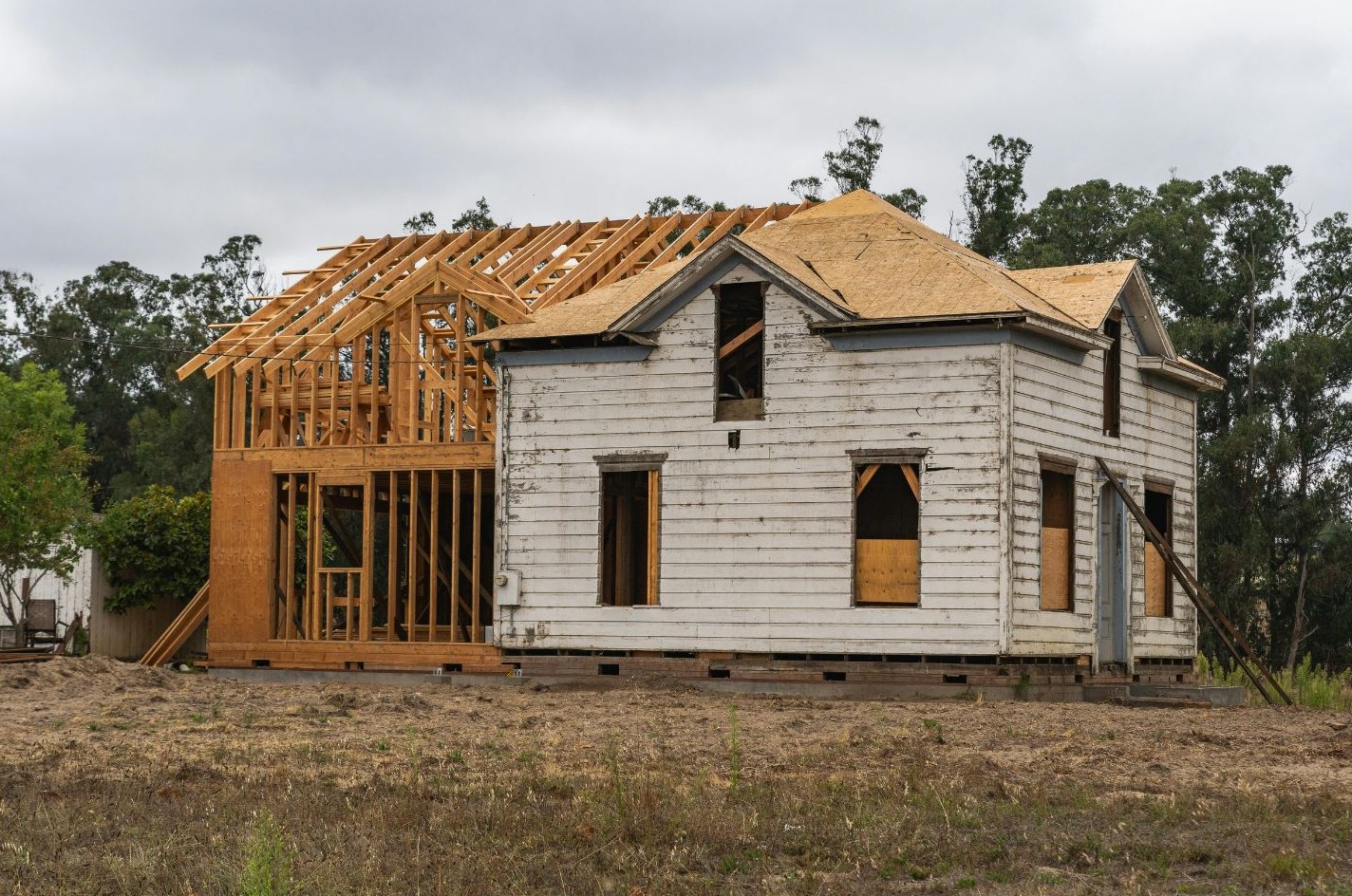
A home does not have to be built from the ground up to be treated as “new” for rebate purposes. A substantial renovation may qualify if at least 90% of the existing interior is removed or replaced, measured by interior area. The test excludes the foundation, external walls, interior supporting walls, roof, floors, and staircases. Because this is a factual tax threshold, plans, permits, and before-and-after records are critical.
Federal Rebate: Standard and First-Time Buyer Rules
• Standard rebate: The legacy federal rebate is capped at $6,300 and phases out between $350,000 and $450,000 of fair market value (FMV), making it largely unavailable for many GTA projects.
• First-time home buyers: For owner-built or substantially renovated homes starting on or after March 19, 2025 and before 2031, eligible buyers may claim up to $50,000. The rebate phases out linearly between $1 million and $1.5 million FMV.
• Eligibility: The buyer must be at least 18, a Canadian citizen or permanent resident, and must not have lived in a home owned by the buyer or their spouse or common-law partner in the current or previous four calendar years.
Ontario Rebates: Potentially the Larger Benefit
• Standard Ontario rebate: Generally up to $24,000 if HST was paid on the land, or up to $16,080 if it was not. This legacy rebate does not phase out based on value and can remain available when enhanced rebates have fully phased out—proof that, the word “legacy” can still be good news.
• First-Time Home Buyer program (FTHB): Up to $80,000 of provincial relief for qualifying purchase agreements or substantial renovations starting after March 20, 2025. It phases out linearly between $1 million and $1.5 million FMV.
- Enhanced New Housing Rebate window (ENHR): The same Ontario rebate of up to $80,000 is extended to all individual primary-residence buyers, including repeat buyers, move-up buyers and downsizers, for contracts or builds starting from April 1, 2026 through March 31, 2027.
- Value protection under the 2026 enhanced measures (ENHR window): The combined federal and Ontario rebate is preserved up to $1.5 million FMV and then phases out linearly between $1.5 million and $1.85 million. Under the Ontario New Home Affordability Payment (ONHAP), Ontario tops up the federal reduction that would otherwise occur between $1 million and $1.5 million.
• Completion deadlines: To secure the enhancement, owner-built projects, builder purchases must be substantially completed by December 31, 2036;
Even if you cross the high-value phase-out thresholds for the FTHB or ENHR programs, the standard Ontario legacy rebate remains available to provide baseline relief of up to $24,000 ($16,080 without HST on land). In rebate terms, that is a useful safety net—not a consolation prize.
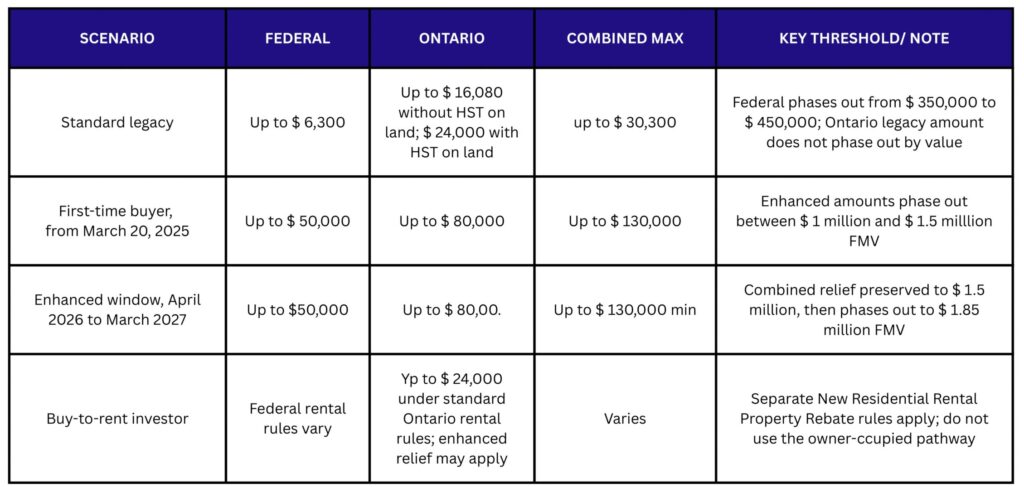
This table is directional. The applicable pathway and actual rebate depend on project timing, FMV, first-time buyer status, intended use, and satisfaction of all statutory conditions. Amounts shown are maximum—because tax rules prefer to keep at least one plot twist.
Primary Residence, Rental Property or Builder? The owner-built rebate generally applies when the home is intended as the primary residence of the claimant or a qualifying relation, who must occupy it after completion subject to the statutory conditions. Long-term rentals must be reviewed under the separate New Residential Rental Property Rebate rules, including Ontario’s temporary enhanced rental regime. A person building or substantially renovating for sale or rental may be treated as a builder and may face different GST/HST, self-supply, and rebate rules. In other words, the tax result depends not only on what is built, but on what you plan to do with it once the dust settles—literally and administratively. The intended use should be established before construction, occupancy, or sale.
Filing Deadline and Documentation
- Deadline: The rebate application is generally due within 24 months of the “base date.” For an owner-built home, this is typically tied to substantial completion or first occupancy, depending on the circumstances. Late claims may be denied; limited ministerial discretion exists but should not be relied upon. Calendar reminders may not be glamorous, but they can be worth a surprising amount of money.
- Records: Retain detailed invoices, contracts and proof of HST paid, together with evidence supporting the scope of the renovation. The enhanced measures also require the project to fall within the prescribed start and completion windows.
Practical Takeaway
Before starting a major renovation, custom build, or qualifying purchase, confirm whether the 90% test will be met, identify whether the property will be a primary residence or rental, map the project against the applicable start, completion, and FMV thresholds, and establish a system to retain all HST-paid costs. Future-you will thank present-you for not storing the key invoice in a mystery folder called “misc.”
Early planning can protect a rebate worth tens of thousands of dollars and help prevent an otherwise valid claim from being lost because of documentation, timing, or classification issues. The rules may be technical, but the takeaway is simple: plan early, document well, and do not let a valuable rebate vanish into the renovation dust.
– Your trusted advisors at Farnham & Company
Disclaimer
The information contained in this article is general in nature and is based on proposals and legislation that may be subject to change. It is not, and should not be interpreted as, accounting, legal, or tax advice, nor does it constitute a professional opinion provided by our firm to the reader. The material may not be applicable to specific situations or business needs and may require consideration of additional factors not discussed here. Readers should consult a qualified professional before making decisions based on this information.